Friday, February 6, 2015

Wear Red Day: Promoting Healthy Hearts and Healthy Minds 

Erik R. Vanderlip, MD, MPH 


Researchers today are putting together what it means to truly have a “broken heart.” As we adorn our favorite red apparel for “National Wear Red Day” to raise awareness of the untold stories of millions of women experiencing strokes or heart attacks in our country, we must consider the contribution of poor mental health to this burden. 

Clinical depression has repeatedly been linked with accelerating the onset of heart attacks and strokes and severely complicating recovery. People with depression often lack the concentration and energy to effectively exercise, eat healthfully, and engage in rehabilitation to optimize recovery. Several studies 1,2 have suggested significant reductions in heart attacks and improved rehabilitation after stroke with proper depression treatment, yet these practices are not yet standard care. Proactively managing our moods and emotions should be granted the same time and effort as lowering our cholesterol, losing weight or dieting. From taking a daily aspirin to taking a walk, keeping tabs on our emotions and addressing them head-on should be an essential part of heart and brain health. 

There are a number of reasons this hasn’t caught on. Cardiologists and primary care physicians are happy to roll up their sleeves to manage cholesterol and lower blood pressure, but when it comes to emotions, many lack the training and expertise to feel confident in diagnosing mental illness, much less manage it. Mental illness is often seen as very subjective, making it challenging to measure or assess. 


Furthermore, mental illness is too often stigmatizing, and many people are embarrassed to admit they’re struggling to cope. Or they may feel as if the overwhelming hopelessness they’re feeling is a natural consequence of having a heart attack or stroke. While it may be common, we know it’s not healthy. Solid, effective treatments exist that we know can help improve our quality of life as well as, perhaps, extend longevity. 


We’re not scared to talk to our doctors about high blood pressure or aspirin, and we shouldn’t be scared to talk to them about our mood. It may be one of the only ways we can begin to mend our broken hearts. 

More information from the American Heart Association:


References: 
1. Jorge RE, Acion L, Moser D, Adams HP, Robinson RG. Escitalopram and enhancement of cognitive recovery following stroke. Arch Gen Psychiatry. 2010;67(2):187-96. doi:10.1001/archgenpsychiatry.2009.185.
2. Stewart JC, Perkins AJ, Callahan CM. Effect of Collaborative Care for Depression on Risk of Cardiovascular Events: Data From the IMPACT Randomized Controlled Trial. Psychosom Med. 2014;76(1):29-37. doi:10.1097/PSY.0000000000000022.

Friday, January 23, 2015

You want to do what?!?! The importance of informed consent in treatment


By Gail  A. Edelsohn, MD, MSPH

We come across ads in print, on television and on the Internet for medications and therapies that promise to make your child do his homework without a screaming match, behave better and generally restore harmony to home life. Not so easy, taking a medication raises a host of questions:  How long does the therapy take? Should I as the parent sign off on this? What about the possible serious side effects, such as significant weight gain, thoughts about suicide, risk of diabetes or a life-threatening condition?


Parents and legal guardians make decisions about psychosocial therapy and medication treatment for children and adolescents every day. But who should give permission and sign informed consent?  What should parents, advocates, guardians be looking for or consider before signing informed consent? Is signing a form enough?  What about the child or teen - do they have a voice regarding their own treatment?
What is Informed Consent?
Psychiatric informed consent involves a parent or legal guardian giving permission for his/her child to undergo evaluation and treatment.  It is a process which partly involves receiving sufficient relevant information about the condition, prognosis, risks and benefits of treatment to be given and other types of treatment available. Informed consent is NOT simply a signed and dated form. Parents and guardian should expect informed consent to include:

  The purpose of the treatment
  • To address a specific condition or diagnosis?
  • To lessen symptoms?
  •  To change behaviors?
  The effects of treatment
  • How will you know if it is working?
  •  How long till you see an effect?
  Risks of treatment
  • Side effects of medications
  • Consequences of psychosocial treatment (e.g., therapy can be emotionally difficult)
  Risks of NO treatment
  • Will symptoms improve over time without treatment?
  • Will things get worse or lead to other consequences? (e.g., Untreated individuals are more likely to use substances, get into legal trouble)
  What alternative treatments are available?
  

For medication
  • Is it FDA approved for this age and condition? (i.e., prescribed FDA on label)
  • If it is prescribed off-label, why?
  • Are there any FDA warnings about the medication and what do they mean?
  • What is the plan for stopping or phasing out the medication?
     Parents and legal guardians are asked to give legal permission or informed consent for treatment.  If a child is in foster care, it may be the parent or it may be child welfare service or court that can give consent.   Where a child is living (home, out of home placement) does not tell you who the legal guardian is.  In some states an adolescent may give informed consent for psychiatric treatment depending on the state’s legislation about mental health procedures. Ideally the parents/guardians and the child should be involved in treatment decision making.

Children also have a voice in this process.  Children and youth should be involved in giving assent.  Assent involves providing the child or teen with information about the therapy or medication in terms appropriate to their age and stage of development. The assent process should include opportunities for the child/adolescent to ask questions and have their concerns addressed.


Gail A. Edelsohn, MD, MSPH, is senior medical officer with Community Care Behavioral Health, clinical professor of psychiatry and human behavior,  Jefferson Medical College, and clinical professor of psychiatry and behavioral science, Temple University School of Medicine.

Friday, January 2, 2015

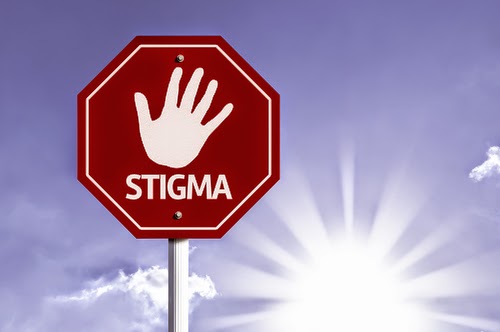
The Power of Words: Addressing the Stigma of Mental Illness

Jenna Bowen, medical student, University of Wisconsin
Reviewed by Claudia Reardon, MD

Crazy.  Insane.  Deranged. Mad.  Lunatic. —Misused as nouns, adjectives and lay-diagnoses, their use perpetuates stereotypes of the wide variety of people who experience mental illness.
Maybe you know someone or, more likely, a number of people who experience depression, anxiety, bipolar disorder or other brain disorders.  According to the National Institute of Mental Health, 1 in 4 American adults and 1 in 5 American youth experience a form of mental illness every year. People with mental illness are teachers, accountants, neighbors, sisters, fathers and friends. Anyone you know could be experiencing mental illness, but afraid to come forward and be treated. Maybe that person is you.
People living with mental illness continue to have an identity that is beyond a diagnosis, similar to other medical conditions. While managing mental illness may be challenging at times—similar to challenges faced by people with diabetes, high blood pressure, or other medical illness— there is greater difficulty in getting the treatment needed because of feelings of shame and stigma surrounding mental illness. However, treatment for mental illness works. Research shows the majority (65 percent to 80 percent) of individuals with mental disorders will improve with appropriate treatment and ongoing monitoring. People with mental illness need to know that they will continue to be seen as people – your brother, best friend, daughter —and not “crazed” or “insane” if they appropriately seek help for a treatable medical condition that they happen to be experiencing.
Bring Change 2 Mind, an organization aimed to end stigma and discrimination surrounding mental illness, offers recommendations to reduce your impact on the stigma surrounding those with mental illness.
  • Use "person first" vocabulary. When we say a person is schizophrenic, we make their mental illness fully define their identity. Instead, be clear that this is a disease that individuals manage and live with— "He is living with schizophrenia."
  • Avoid the verb "suffers" when discussing mental illness. Instead, choose, "lives with mental illness" or "is affected by mental illness."
  • There are many phrases and terms; "crazy," "nuts", "psycho", "schizo", "retard" and "lunatic" that may seem insignificant, but really aren't.

Be an advocate for those that you know, and the many that you don’t know, who are living with some form of mental illness by breaking down stigma, and being conscious of language surrounding brain disorders. To learn more check out:
·         Bring Change 2 Mind
·         NAMI – Stigma Busters


Friday, December 5, 2014

Study highlights lack of access to mental health care

By Arshya Vahabzadeh,MD 
 @VahabzadehMD

A new study from the CDC’s National Center for Health Statistics once again highlights that too many people living with mental health conditions are not getting needed care.

Study authors Laura A. Pratt, PhD, and Debra J. Brody, MPH, found that nearly 8% of Americans aged 12 and up had depression (moderate or severe depressive symptoms in the past 2 weeks). The rate of depression was twice as high among people living below the poverty level, 15%.

 Far more alarming, the study showed yet again that people with depression are going untreated. While nearly 90% of people with severe depressive symptoms reported difficulty with work, home, or social activities related to their symptoms, only about one-third (35.3%) had seen a mental health professional in the past year, according to the study. Among those with moderate depressive symptoms, only 1 in 5 had seen a mental health professional.

While there are many reasons people don’t get needed mental health care, including mental health stigma and lack of access, discrimination in mental health coverage by insurance companies shouldn’t be among the reasons. Federal law now requires that insurers cover mental health illnesses the same as physical ailments, such as heart disease, diabetes and cancer.


However, many people don’t know their rights when it comes to getting mental health treatment. To address this glaring problem, the American Psychiatric Association has released a new poster --
available to mental health professionals -- that explains in simple terms your rights under the law and what to do if you think your rights are being denied. Download a copy at www.psychiatry.org/parity.

Tuesday, December 2, 2014

World AIDS Day


By Annelle Primm, MD, MPH

World AIDS Day
December 1, 2014
Focus, Partner, Achieve:  An AIDS-Free Generation

World AIDS Day is a key opportunity to raise awareness and to commemorate those who lost their lives to this often deadly disease. But, today, we can also be hopeful about achieving an AIDS-free generation.  Increased access to treatment, new and better prevention services and care, and advances in treatment are all reasons for hopefulness.  And that amounts to greater peace of mind.
 
An estimated 35 million people worldwide have HIV and more than 39 million people have died from the virus since the first cases in 1981. In the U.S., more than 1.2 million people live with HIV, but nearly 1 in 7 of those don’t know they have the virus.
An estimated 50,000 people in the U.S. are newly infected each year.  It’s why I continue to tell people the importance of getting tested.  There’s no shame, just a need for information.

What is the Connection Between HIV and Mental Health?
Mental and neurological disorders have an intertwined and often complex relationship with HIV and AIDS. Yet mental health issues are often overlooked in HIV interventions and treatment.

  • About 60% of people with HIV also have depression.  Sometimes one may be tempted to “blame” depression on their HIV status, but the reality is that depression can happen to anyone and treatment works
  • Pre-existing mental disorders (including substance use) can complicate HIV-related illness.  It’s important for physicians to know all they need to know about your health, and for you to be comfortable sharing  
  • Nearly 50% of people with HIV experience impaired motor skills, trouble with memory and poor concentration.  If you experience such changes, those are important to inform your doctor about
  • Mental illness can make it more difficult for people to adhere to HIV-medication regimens
  • New antiretroviral treatments and combination therapies can affect the central nervous system and/or have psychiatric side effects
  • Mental illnesses can be especially challenging to recognize and diagnose in people with HIV/AIDS.  That’s why the APA works to educate and provide tools and training to physicians.

Unfortunately, both HIV and mental illness still carry a significant burden of stigma and discrimination.

As HIV/AIDS increasingly becomes a chronic disorder with the improvement of treatments, the need for mental health care and services is rising.  World AIDS Day is also a day to recognize the many psychiatrists and other mental health clinicians working with HIV patients who also have complicated psychiatric or substance use comorbidities.


Looking for ways to take action?
  Here are a few simple, powerful, and engaging ways you can take action:

Annelle Primm, MD, MPH is the Deputy Medical Director of the American Psychiatric Association